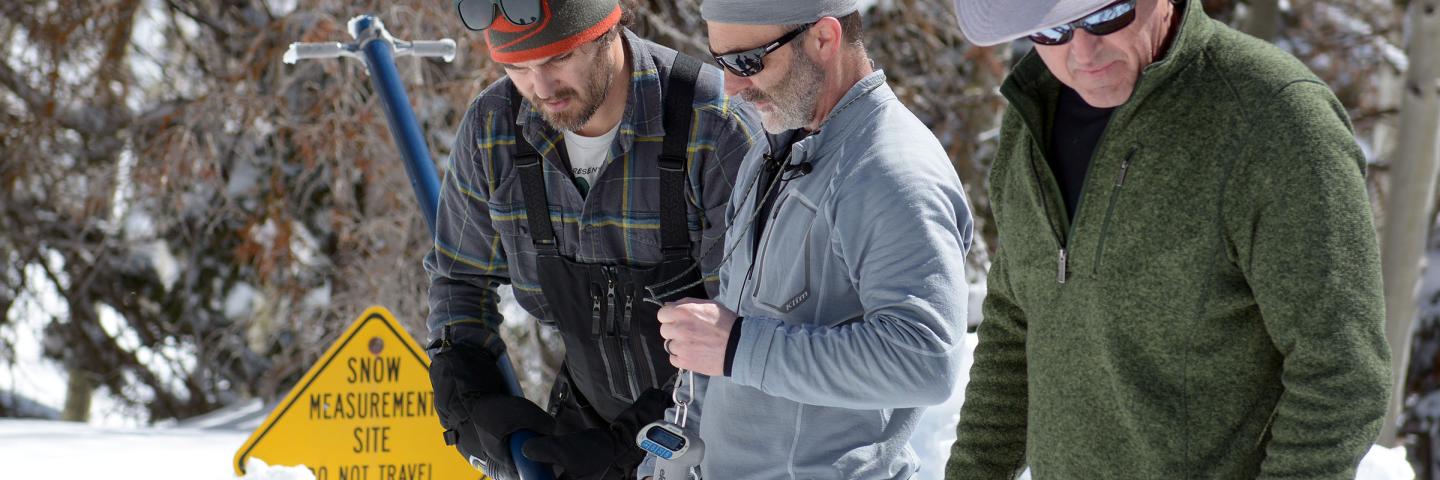
Utah’s snowpack is off to one of its worst starts on record, with 20 mountain monitoring stations reporting record-low snow levels as of January 1, according to the latest Water Supply Outlook Report from the USDA Natural Resources Conservation Service.
Despite near-normal precipitation, unusually warm temperatures have pushed snow levels higher in the mountains, causing precipitation to fall as rain rather than snow at mid and high elevations.
“This winter has gotten off to a very strange start with record-breaking warm conditions and poor snow cover,” wrote Jordan Clayton, data collection officer for the Utah Snow Survey, in the report.
Statewide snow water equivalent — the amount of water contained in the snowpack — stood at just 56% of normal on January 1. Early January storms improved conditions slightly to 75% of normal, but 14 monitoring sites still reported record-low readings as of January 9.
Conditions vary significantly by region. The Lower Sevier and Tooele Valley–Vernon Creek basins are faring worst, at around 30% of normal.
Silver linings
The report notes some encouraging signs. Mountain soil moisture is well above normal, at the 95th percentile statewide, which could improve snowmelt runoff efficiency this spring. Year-to-date precipitation stands at 119% of normal across Utah.
Clayton noted that similar early-season conditions in 1990, 2010, 2014, and 2024 ultimately produced above-normal snowpack by season’s end, offering hope that this winter could still recover.
Utah’s reservoirs are currently at 62% of capacity, down 13% from this time last year. The Upper Sevier watershed has seen the steepest decline, dropping from 59% of capacity last year to just 26% currently.
Ken’s Lake, a key irrigation reservoir south of Moab, was at about 40% of capacity as of Jan. 12, according to Utah Division of Water Resources data. Because the reservoir depends heavily on spring snowmelt to refill before irrigation season, below-average snowpack or early runoff could limit how much water is available later in the year.
What it means locally
The Colorado River Basin, which includes the rivers and tributaries flowing through the Moab area, is part of a much larger system that supplies water to roughly 40 million people across seven U.S. states, tribal nations, and Mexico. Most of that water comes from mountain snowpack that melts in spring and feeds reservoirs such as Lake Powell and Lake Mead.
The basin has experienced a prolonged period of drought and warming temperatures since the early 2000s, which has reduced snowpack, dried soils, and lowered runoff efficiency. As a result, major reservoirs remain well below historical averages, even after a few stronger water years.
Low reservoir levels have already triggered mandatory water cuts in the Lower Basin and intensified negotiations over how the river will be managed in the future. The current federal guidelines governing Colorado River operations are set to expire in 2026, and the U.S. Bureau of Reclamation is in the process of developing new rules that will determine how shortages are shared if supplies continue to decline.
For the Moab area, reduced snowpack and runoff upstream can affect local river flows, municipal water supplies, irrigation, recreation, and ecosystem health. While the statewide snowpack report does not provide basin-specific projections for the Colorado River, local and regional water managers will be closely watching how the rest of the winter unfolds and how spring temperatures influence snowmelt and streamflow.
The next Water Supply Outlook Report, due February 1, will include updated streamflow forecasts and Surface Water Supply Indices for Utah’s major river basins.
Appreciate the coverage? Help keep local news alive.
Chip in to support the Moab Sun News.