Moab history: Saloon snapshots and dance hall tales
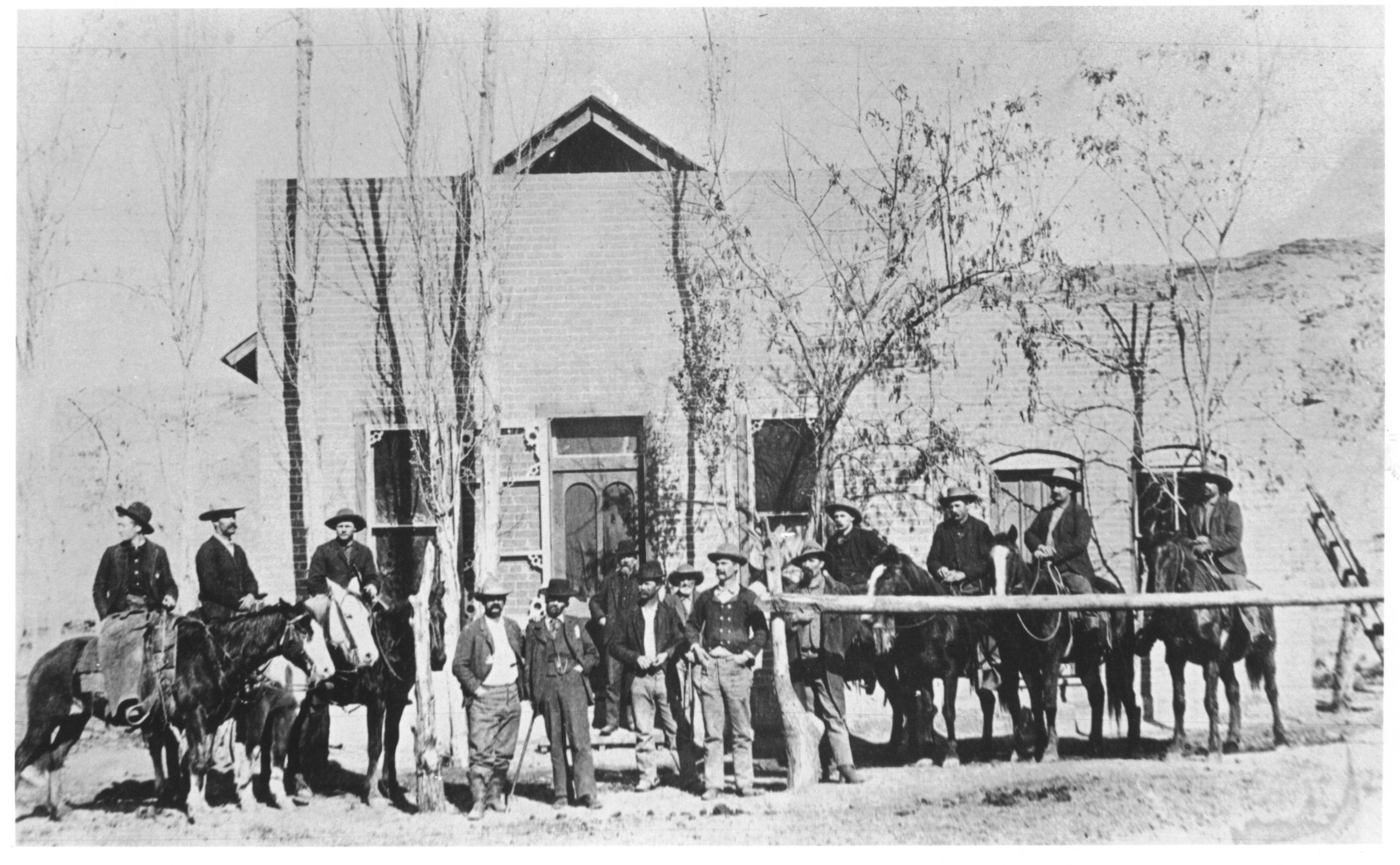
While they may look somewhat like the Wild Bunch of Robber's Roost, these men were in fact many of the town’s prominent businesspeople in the 1880's and 1890's. Gathered here outside of a saloon, these men were among the town’s movers and shakers of the time: running ranches or businesses in town. According to the Museum’s records, this building was likely operating as Tet's Saloon when this photograph was taken. The building was located near the intersection of 200 North and Main Street but was later torn down to make way for road improvements. From left to right: Eck McCarty, Sid Pace, Bill Empey, Grip Taylor, Fadonskie Jew, Crispen Taylor (on step), Frank Dixon, Mr. Harpole, W.L. Tet Taylor, Judge Taylor, J.T. Loveridge, (unidentified), Philander Maxwell, and (unidentified). [Moab Museum Collection, 1890]
Watch out: this post is over a year old and kept for archival purposes. Some information may be outdated.
Many facets of Moab have changed over the course of the town’s history: from the streets to the culture to the favorite pastimes of the people who call this place home. While countless restaurants, bars, and other venues have come and gone over the years, many generations of Moabites have appreciated the opportunity to gather for dancing, socializing, or sharing a drink.
Photographs and stories from the Moab Museum’s collection include images of dance halls, saloons, and community gathering spaces. This selection, from the late 1800s and early 1900s, offers a sampling, though the Museum’s collection contains a photographic treasure trove of parties and venues spanning many different chapters of Moab’s past.
Click the images to make them larger!
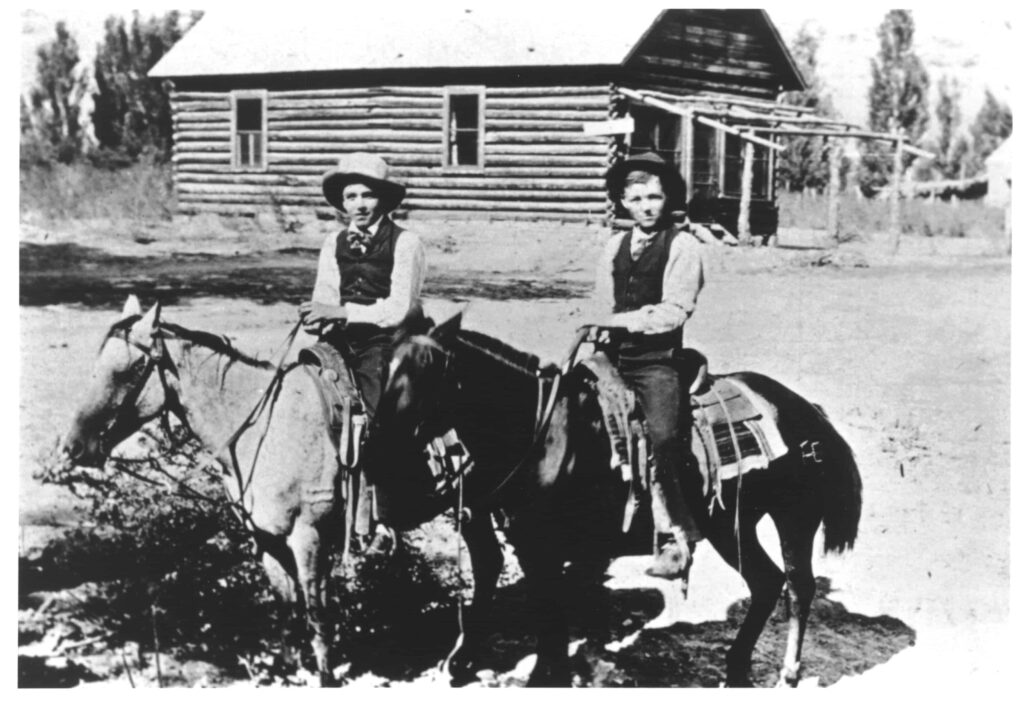
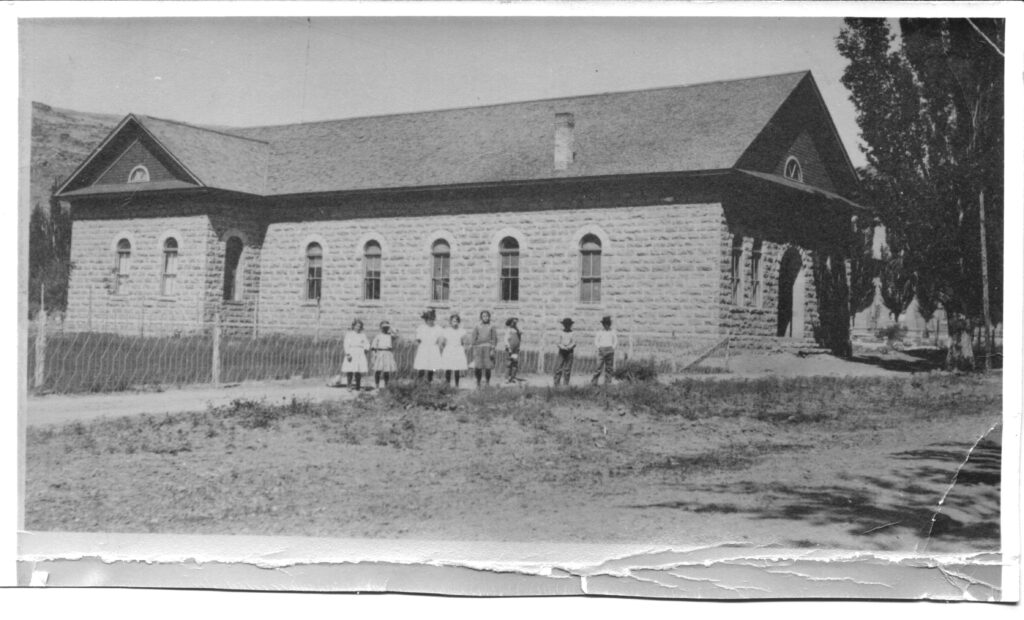
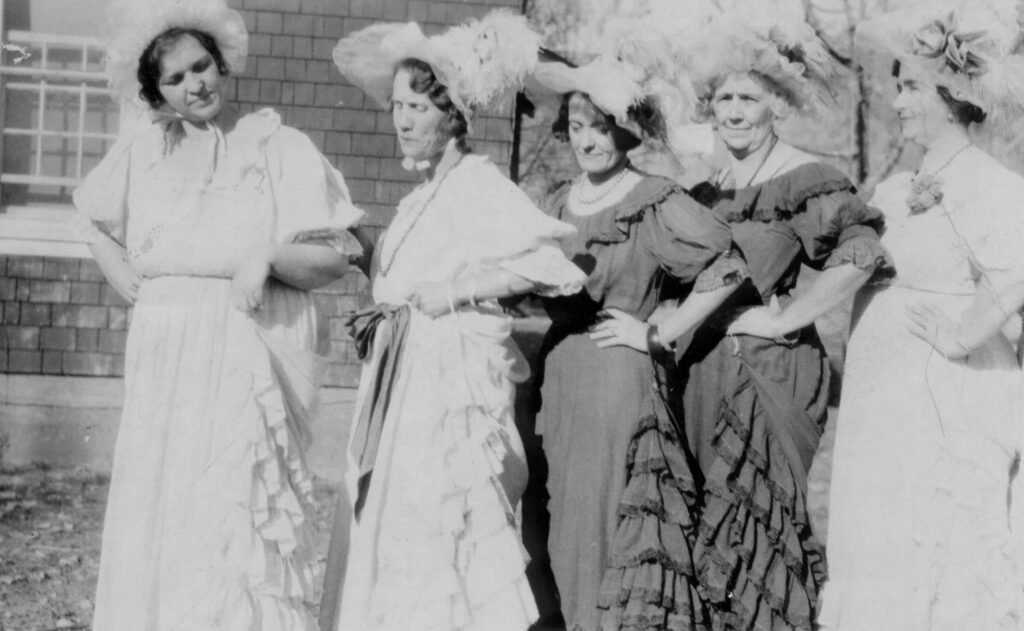
Two riders pause outside of Green’s Dance Hall, once the location of dancing and parties in Moab. Charlie Green was an early cowboy working around the Abajo Mountains who later settled in the Moab area. In the late 1800s, private homes in town were typically too small to accommodate many people dancing, so Green had this dance hall built. In 1893 when the county was looking for a courthouse location, Green offered this property to them, though the county ultimately chose a different site. [Moab Museum Collection, 1890] The LDS Church built Star Hall in 1906. Made of stone quarried from Goose Island (about 1 mile up Utah 128 along the Colorado River), it was built as a recreation hall. The building housed dances, parties, funerals, weddings, and movie screenings. In 1925, it was sold to the school district where it was used as a gymnasium, classroom and wood shop. It was remodeled in the 1960s for use as a theatre and auditorium. [Moab Museum Collection, 1906] Members of the Moab Women’s Literary Club dressed up to attend a dance. For a full century, the Club was a crucial force in the town’s development: they were responsible for the creation of the library, the Museum, and many other Moab fixtures. They also held events, including lectures, presentations, and social gatherings. Here, several women pose in their dancing outfits. [Moab Museum Collection, undated]
The Moab Museum is dedicated to sharing stories of the natural and human history of the Moab area. To explore more of Moab’s stories and artifacts, find out about upcoming programs, and become a Member, visit www.moabmuseum.org.
Appreciate the coverage? Help keep local news alive. Chip in to support the Moab Sun News.