Nearly one fourth of households on the Navajo Nation live without electricity. For those 10,000 families, staying warm through the winter isn’t possible without firewood.
“I grew up with a single mother,” said Collin Jackson. “Me and my brother and all of our cousins were always out in the mountains cutting wood.”
At a recent volunteer event held by the nonprofit Warm Elders, Jackson remembered the responsibility he had as a young boy to keep his family warm.
“We didn’t have a pickup truck, so we had to borrow one,” he said, “and we didn’t have a chainsaw either, we just had an axe. There was no machine to lift the heavy logs. We carried all of it by hand, and then brought it home to chop it and split it ourselves.”
Because Navajo lands spread across the dry, four corners region of the Southwest, people like Jackson’s family have to drive hundreds of miles to reach the nearest forest.
But one trip to harvest timber isn’t enough to last through the winter.
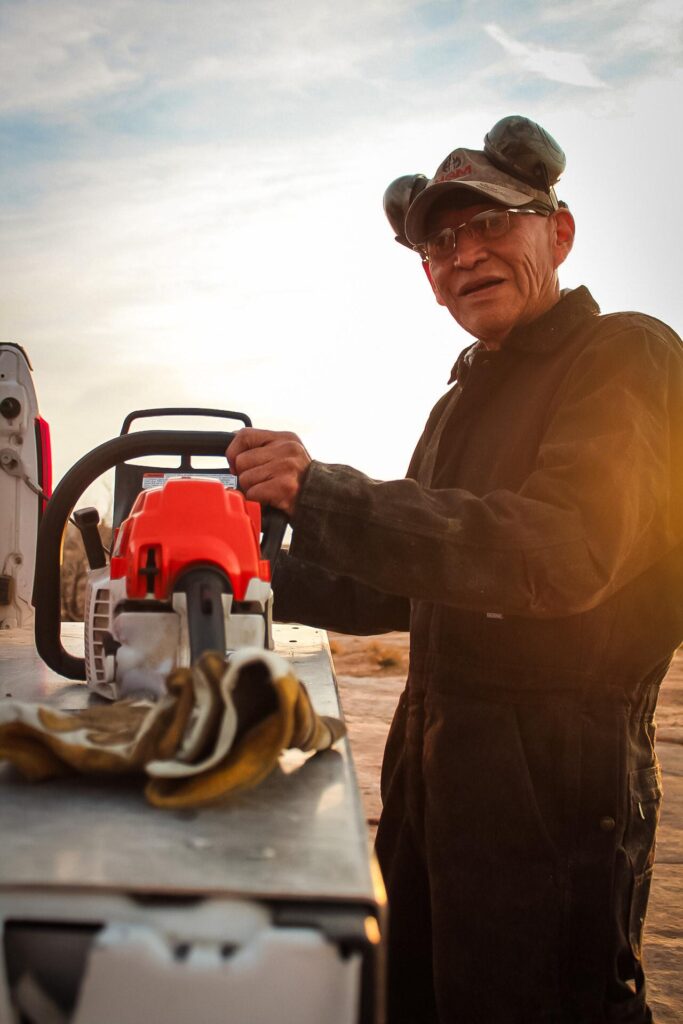
A pickup truck filled to cab level is only one cord; families on the reservation can burn up to 10 cords during the winter, especially if they use firewood to cook or if their houses are poorly insulated.
This means families have to make multiple hundred-plus-mile-trips each year to ranges like the San Juan and La Sal mountains just to stay warm.
If people can’t collect and process their own lumber due to lack of equipment, limited physical ability or old age, their only other option is to buy it. But high demand causes high prices. Often, firewood for sale on the Navajo Nation is extremely expensive.
“The elders don’t have a choice,” said Herbert Stash, a Moab resident who grew up on the reservation. “And those other vulnerable, exposed communities don’t have a choice either.”
Several years ago, Stash began delivering firewood to elderly family members in need.
“When we were growing up, we were taught to respect and take care of our parents and grandparents,” he explained.
Stash has learned to listen closely to his Navajo elders: sometimes, even a subtle mention of changing weather can indicate they don’t have enough firewood to make it through the winter.
As Stash worked to keep his elders warm, word spread to neighbors and friends who were also in need. Soon, he and his family started collecting and processing lumber so they could deliver it to many households.
“Four houses turned into ten. And then it got to the point where we were doing fifty,” Stash said. “I couldn’t keep up.”
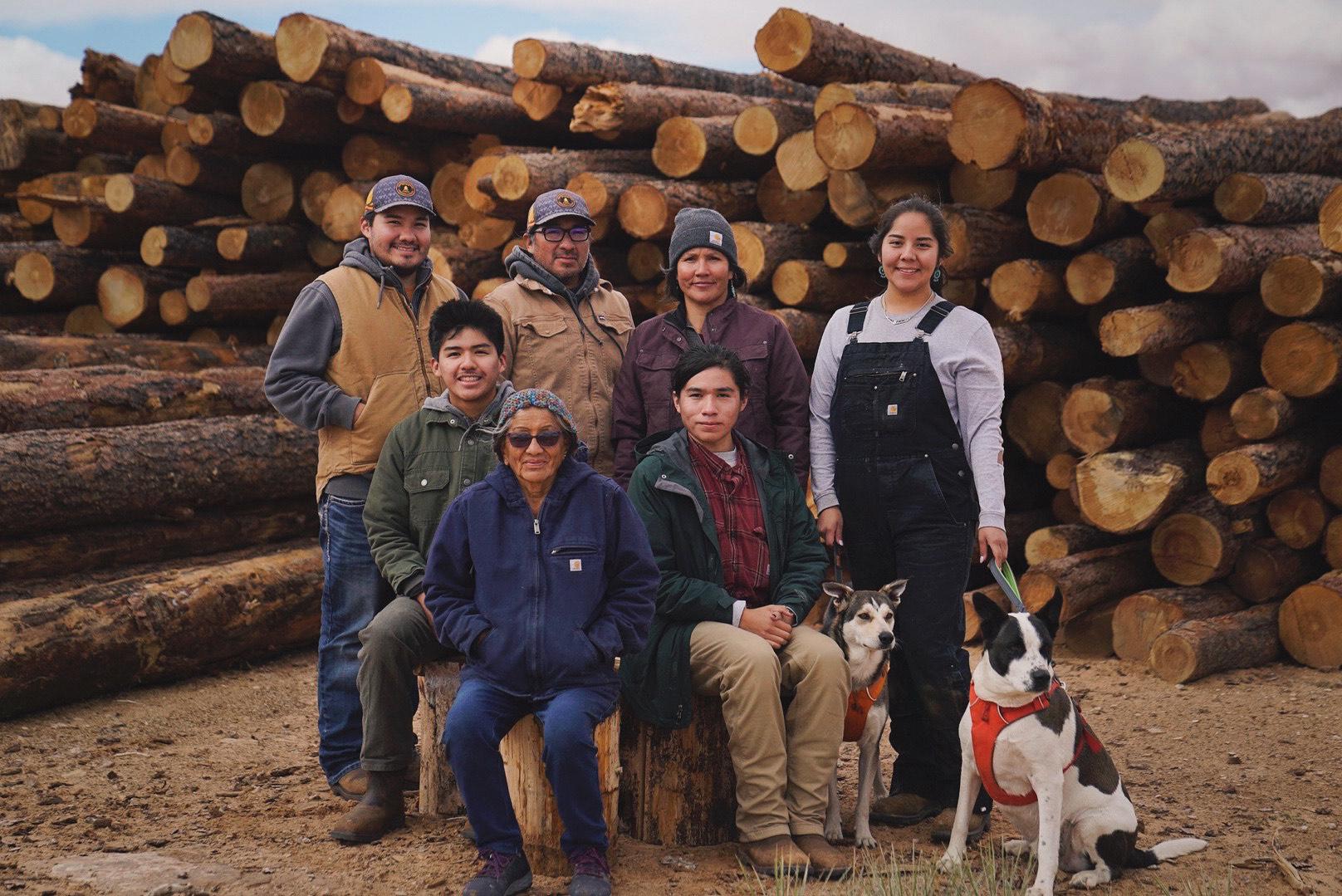
Stash and his family needed more money and equipment to continue helping their community. In May of 2024, they formed a nonprofit called Warm Elders.
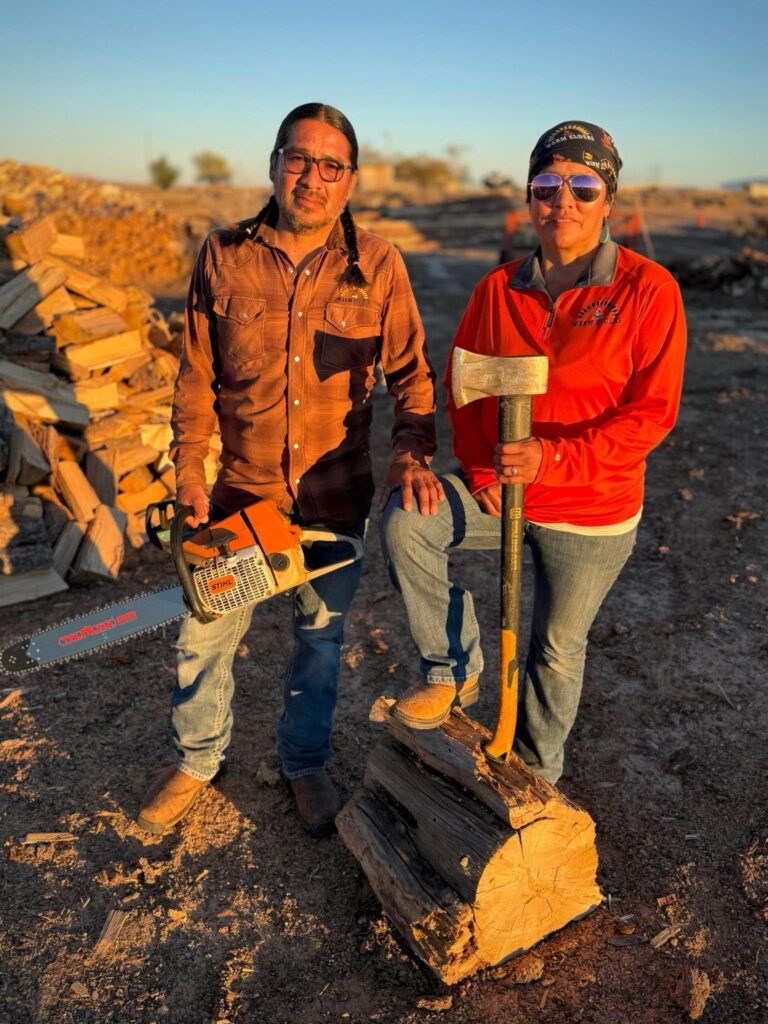
Warm Elders collects, processes and delivers free firewood to families across the Navajo Nation. They prioritize serving elders, veterans and people with disabilities, but encourage others in need to volunteer at their wood site in exchange for lumber.
The family-owned nonprofit splits and cuts logs at their site in Red Mesa, which sits between six chapter houses (similar to city hall buildings) on Navajo land. They invite applicants from neighboring areas to pick up wood from the site on designated days, but also make personal deliveries to home-bound applicants, sometimes driving more than fifty miles to do so.
To make their work possible, Warm Elders partners with organizations like the National Forest Foundation.
Through its Wood For Life initiative, the National Forest Foundation gives timber from forest restoration and fire prevention efforts to Indigenous communities. In the past, that lumber was burned or chipped; now Native populations use it to keep warm.
Warm Elders receives dozens of truckloads of timber from the National Forest Foundation each year thanks to this partnership with Wood For Life.
The nonprofit also receives funding through organizations like the Alliance for Green Heat, which works with federal agencies to expand wood heating programs in low-income communities. Stash and his family used this federal funding to pay for equipment like woodsplitters and chainsaws.
Because of these partnerships, Warm Elders successfully distributed over 250 cords of firewood in 2024, helping hundreds of families across the Navajo Nation.
Stash plans to apply for more funding to expand the reach of his nonprofit. He wants to be able to pay for his family members to get chainsaw certified and enroll in administrative classes and workshops. He hopes future grants will help him employ Native youth: while they build woodsheds and clean chimneys for their elders, they will also stimulate the local economy.
In an interview with the Sun News, Stash pointed out the difficulty of relying on federal funding.
“When this administration came through and closed everything down, it affected us here,” he explained. “We went from receiving fifteen semi truck loads [of timber] to five because the administration cut funding.”
“During that period of uncertainty, we were waiting,” he continued. “But the thing is, winter doesn’t wait.”
During the funding freeze, Stash and his family didn’t know if they were going to receive more loads of wood or not. In anticipation of the colder months, they started imagining how they would need to rethink distribution. Instead of helping over 100 applicants for example, they would have to divide firewood between the 30 families most in need.
Despite the unreliability of federal funding in 2025, Warm Elders received lumber donations from private landowners and conservation core groups working with the Bureau of Land Management.
With this support, and the help of their volunteers, they plan to distribute the same amount of wood this year that they delivered in 2024.
Warm Elders empowers volunteers by educating them on how to operate machinery safely, and providing them with the necessary equipment.
“I’ll get you a saw. I’ll get you chaps,” said Stash. “If you want to learn, we’ll slow everything down for you.”
Although some volunteers split, cut and stack lumber, “there’s something to do for everybody,” explained Stash.
Volunteers can help with firewood deliveries and community outreach efforts, or cook nutritious meals for other people working at the wood site.
Collin Jackson, who opened the story with memories of gathering wood as a boy, is now part of that cycle. He and his wife have cooked for volunteers, and their boys have helped at the yard. This winter, Jackson picked up wood for relatives in need, grateful to be on the receiving end after years of giving.
If you’re interested in getting involved with Warm Elders, fill out a volunteer application on their website. They need help with firewood distribution this fall, and would especially appreciate support processing timber during the warmer months in years to come.
Appreciate the coverage? Help keep local news alive.
Chip in to support the Moab Sun News.