Winter is the best time to tackle fire fuels — for everyone
There’s a saying in the wildfire world: when it’s not fire season, it’s fuels reduction season.
Late fall through early spring is the best time to thin out or remove fire fuels that will become a big risk in the summer.
To kick off the season, the FireBREAK Campaign launched its own multiphase project to remove one of the biggest remaining stands of fire fuels in the Moab Valley’s creek corridors.
FireBREAK is a collaborative local campaign that aims to reduce the chances of a catastrophic fire in the Moab Valley by conducting fuels reduction projects, especially along Mill and Pack creeks, and engaging the community.
“Moab has already faced several intense fires in the creek corridors that have threatened residents and destroyed homes,” said Moab Valley Fire Chief TJ Brewer. “We’re out here trying to reduce the risk of another Cinema Court or Murphy Lane fire.”
FireBREAK partners include around a dozen local organizations, including Rim to Rim Restoration, Moab Valley Fire Department, and Grand County Weed Department.
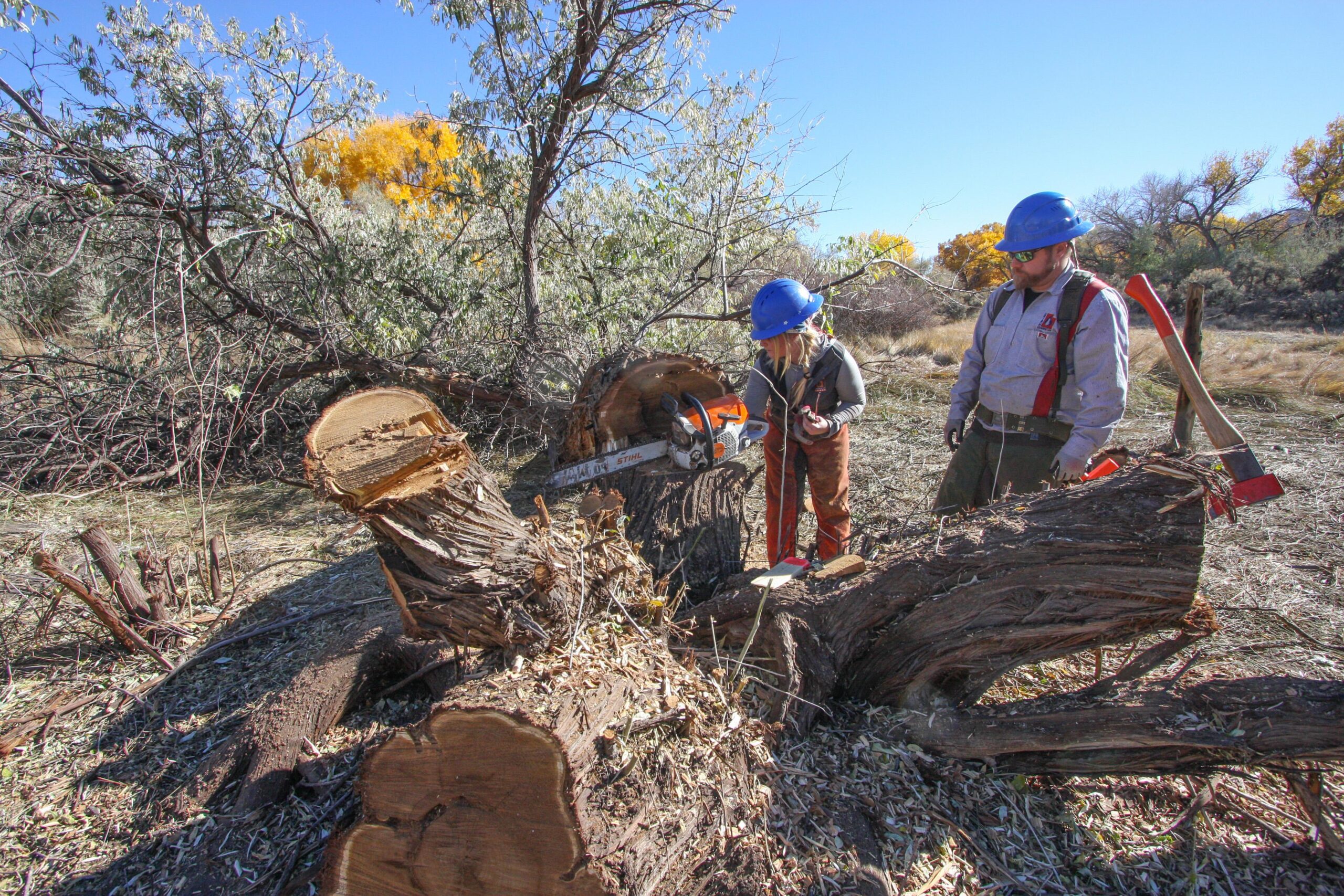
This month, FireBREAK partners teamed up to proactively reduce overgrown, invasive fire fuels — mainly Russian olive trees — on two dense acres of a large property along Pack Creek south of Spanish Trail Road. The property is owned by the City of Moab, another FireBREAK partner.
“We’re pleased to be a FireBREAK partner for this and other important fire fuels reduction projects,” said Moab City Manager Michael Black. “Clearing debris from the creek corridors is a significant step in helping keep our community safe by reducing the spread of potential wildfires. We appreciate the hard work of Rim to Rim, the Moab Valley Fire Department, and all the other FireBREAK partners and collaborators.”
Given the scale and density of the thickets, the property will take multiple phases to work through. Crews worked around native trees like cottonwoods, removing only invasive trees and other hazardous fire fuels. Seeding and planting of native species will also occur down the line.
The project also produced over 3,200 cubic feet of firewood that will be used to heat homes on the Navajo Nation and other tribal lands, thanks to partnerships with the nonprofit Warm Elders and other organizations.
Project crews came from the Moab Valley Fire Department, Grand County Weed Department, Utah Conservation Corps, and the Utah Division of Forestry, Fire and State Lands. Rim to Rim Restoration planned logistics and outreach for the project, while the City of Moab loaned equipment and bolstered planning efforts.
“It’s especially exciting when so many local organizations can join forces to make a big dent like this,” said Rim to Rim Executive Director Kara Dohrenwend. “We also want to emphasize that fuels reduction is for everyone.”
We can all reduce fire fuels this winter
FireBREAK encourages residents in the Moab Valley and beyond to use the cooler weather as an opportunity to reduce fire risk on their own properties.
During the winter, it’s easier, safer, and more pleasant to do the work involved in fuels reduction. Temperatures are cooler, power tools are less likely to throw sparks that could start a fire, and the lack of leaves and growing plants makes yardwork easier to tackle.
Winter is also open burning season in Castle Valley and unincorporated Grand County. Before burning, residents must obtain a permit.
As a reminder, residential burning is always prohibited in the City of Moab. As part of the FireBREAK project, the Moab Valley Fire Department has been permitted to conduct limited prescribed burns within city limits.
Burns will be planned to align with safe weather conditions and proper clearing index levels. Notice to neighboring properties or affected populations will go out before any such burns, which will be limited to a few properties with high fire hazard where burning is the only way to reduce the hazard.
To fight fire fuels, start with these 4 tips from FireBREAK
Wondering where to start with fuels reduction? Follow these four tips to tackle fire fuels before things heat up in the spring.
- Don’t let fire hit the jackpot. Dispose of piles of leaves, needles, or brush. Especially anything on top of or next to a structure, porch, or fence!
- Ladders are for firefighters, not fires. Trim or fell invasive “ladder fuels.” Those are usually smaller trees like tree of heaven, Russian olive, and tamarisk that connect larger canopies to the ground, and can greatly intensify fires.
- Stay lean, clean, and green. Thin any overgrown thickets of vegetation on your property, especially within 5 feet of houses and structures. This is the area most important to address immediately, as it can ignite structures through flying embers if a wildfire is nearby.
- Make a break for it! Look at the vegetation in your yard and break up the vertical or horizontal continuity in a few places. This can be done by cutting or limbing trees, clearing shrubs and brush, or making a plan to mow grasses in the spring.
For more tips on preparing your home for wildfire, visit the National Fire Protection Association or learn more about the FireBREAK Campaign.
Appreciate the coverage? Help keep local news alive.
Chip in to support the Moab Sun News.