“The canonical story of Glen Canyon is the story of…how we lost it,” said Zanna Stutz, program manager of the Glen Canyon Institute. “It’s a story of what happens if you let a river die.
“That’s a really well-known story,” she said, “but what is less well-known is what is happening in Glen Canyon right now.”
On Thursday, November 13, the Glen Canyon Institute will cohost Rivers of Change with Returning Rapids Project and the University of Utah’s Department of Geology and Geophysics. The event will update the public’s understanding of the Glen Canyon narrative using new research findings.
It will also raise money for Returning Rapids, the organization that makes research along the Colorado and San Juan rivers possible. The fundraiser will begin at 12:30 p.m. with a free symposium at Star Hall, followed by a dinner catered by 98 Center. The evening will conclude with a screening of the film What the River Knows and a panel discussion. Tickets are $15.
The event will also include a screening of “What the River Knows.” For two years, the Glen Canyon Institute worked with directors Will Buckley and Diego Riley to create a new documentary film exploring the reemergence of Glen Canyon from the receding waters of Lake Powell reservoir.
Stutz explained that the event isn’t simply about sharing scientific research findings, but also “the emotional and social side of what’s going on here.”
“What are the different ways that this story can be communicated outside of just the data and the science?” she asked.
Following that question, presentations will be given not just by scientists and researchers, but also by river advocates and artists on topics including the emotional connection between people and the landscape, ecosystem and vegetation changes caused by fluctuating water levels, histories of river conservation and stewardship, and the impact of Glen Canyon Dam.
“If you’re curious about what’s going to happen with the Colorado River, and you want to think about what solutions there might be in the future, this symposium could bring new information to light that might help you understand that,” said Mike DeHoff, principal investigator of the Returning Rapids Project.
As part of his work with Returning Rapids, DeHoff monitors the impact of the immense amount of sand and soil deposited into Lake Powell each year.
“Imagine a football field with a foot of sediment,” he explained, “and then stack 40,000 of those on top of each other. That’s how much sediment we’re talking about per year.”
A 2022 U.S. Geological Survey conducted by Dan Jones and Casey Root shows that approximately 7% of the Lake Powell reservoir has already been filled with a layer of sand.
“That puts a pretty interesting finite limit on the utility of the reservoir for water storage,” said Brenda Bowen, a sedimentary geologist at the University of Utah whose work will be featured at the symposium.
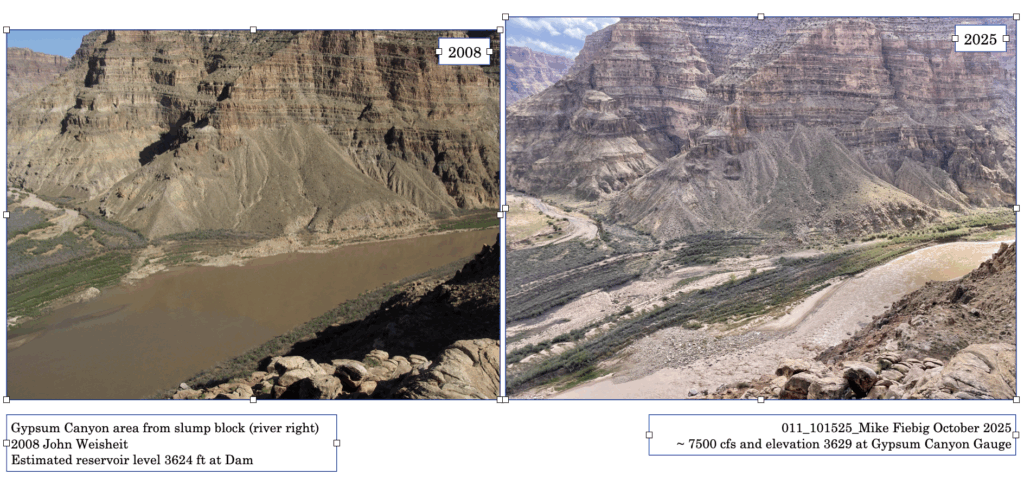
Recent dramatic drops in water levels have exposed huge sediment deposits that were previously hidden by the reservoir. In some cases, these huge banks of sand and silt block the entire Colorado River channel, threatening the health of river corridors and their ecosystems.
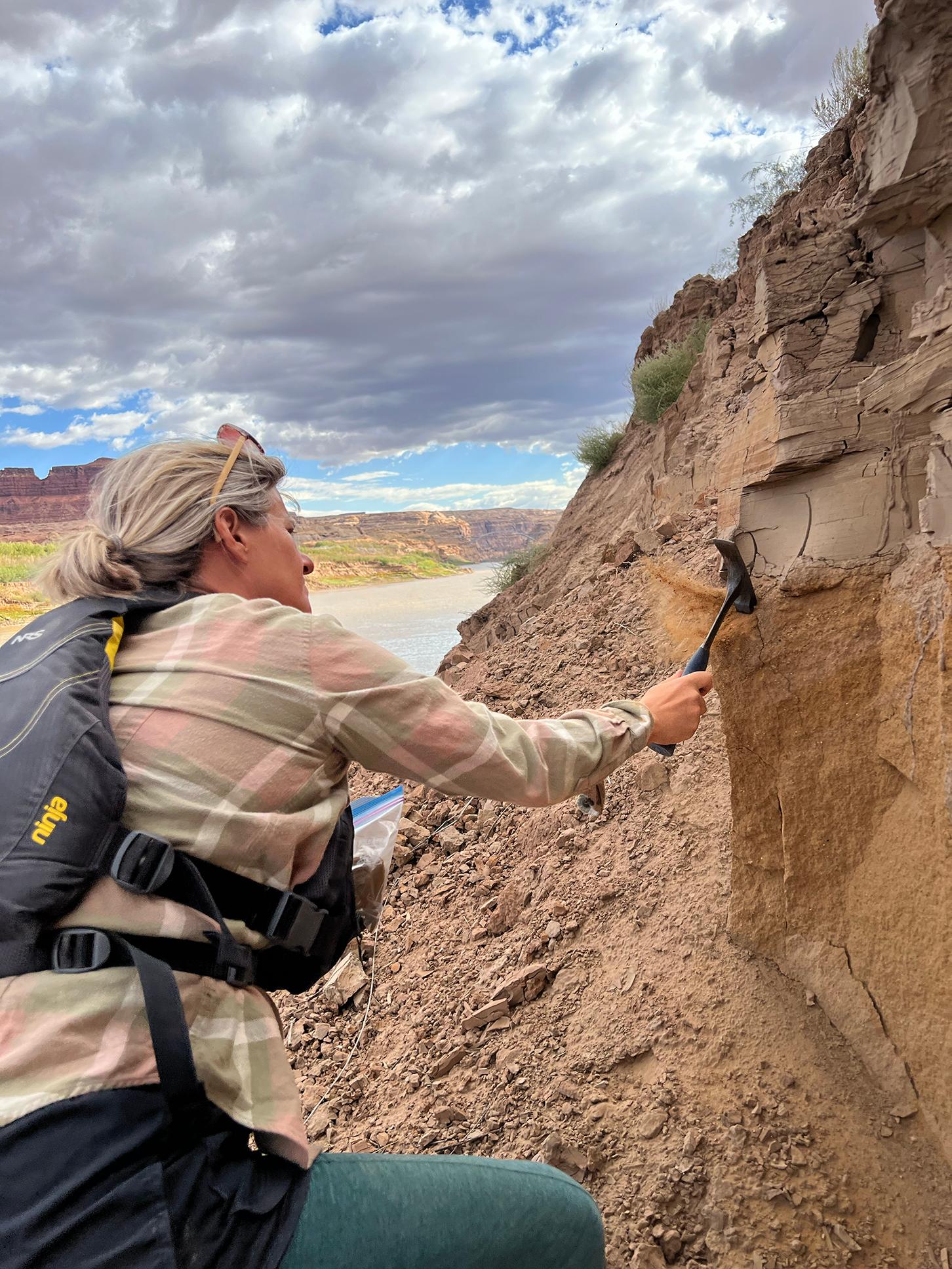
Although Bowen and her team have been able to collect some data using satellite technology and imagery from airborne missions, there’s no substitute for conducting research on the ground or along the river. But many of these river areas can’t be accessed without technical boating skills.
That’s where Returning Rapids comes in.
DeHoff and his team enable scientific research by providing logistical support and local expertise. Most importantly, they have the skills to safely transport scientists to their research areas, which sometimes involves navigating technical rapids.
Through this work, recent research conducted on the Colorado and San Juan rivers has revealed unexpected and encouraging results: many ecosystems in areas previously flooded by Lake Powell are recovering now that waters have receded.
“Newly exposed banks are prime territory for riparian vegetation,” explained Bowen.
Native fish species, willow forests, cottonwoods, and beavers have returned to these exposed landscapes, breathing new life into areas once flooded by the dam.
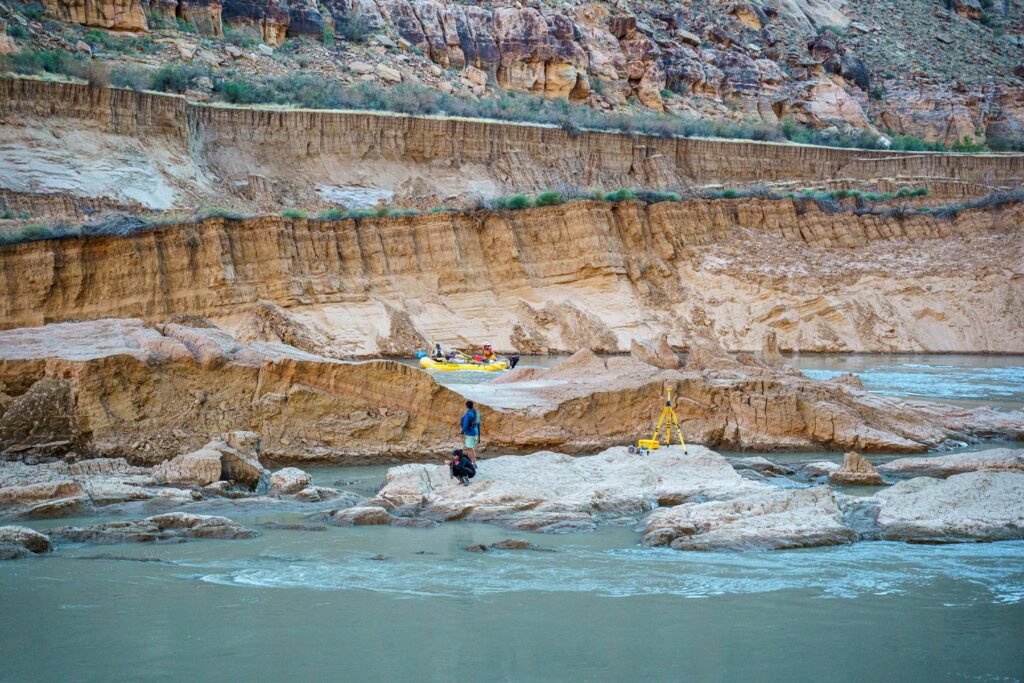
The fundraiser’s featured film “What the River Knows” includes beautiful shots of these recovering landscapes, showcasing portions of Glen Canyon that have been exposed for the first time in decades.
“As a geologist, I often find hope in geologic time,” explained Bowen. “Humans do all kinds of crazy things, but in the big picture, the river will flow all the way through eventually, because that’s been going on for millions and millions of years.”
Thanks to the river’s resilience, the oft-repeated story of loss and devastation along the Colorado River is again being rewritten.
All members of the Moab community interested in the Colorado River and its future are invited to attend the symposium and film screening on November 13.
Appreciate the coverage? Help keep local news alive.
Chip in to support the Moab Sun News.