
Debate centers on whether to keep successful recreation program under county control or attempt to transition to nonprofit
Grand County commissioners remain divided on the future of the Trail Ambassador program following a heated workshop discussion at a workshop August 19 that exposed deep disagreements about funding priorities.
The four-year-old Responsible Recreation program had its 2025 budget slashed this year, after a state audit ruled that funds used to support the program were misallocated. Now some commissioners are arguing that the program should eliminated from the county and perhaps transitioned to nonprofit status.
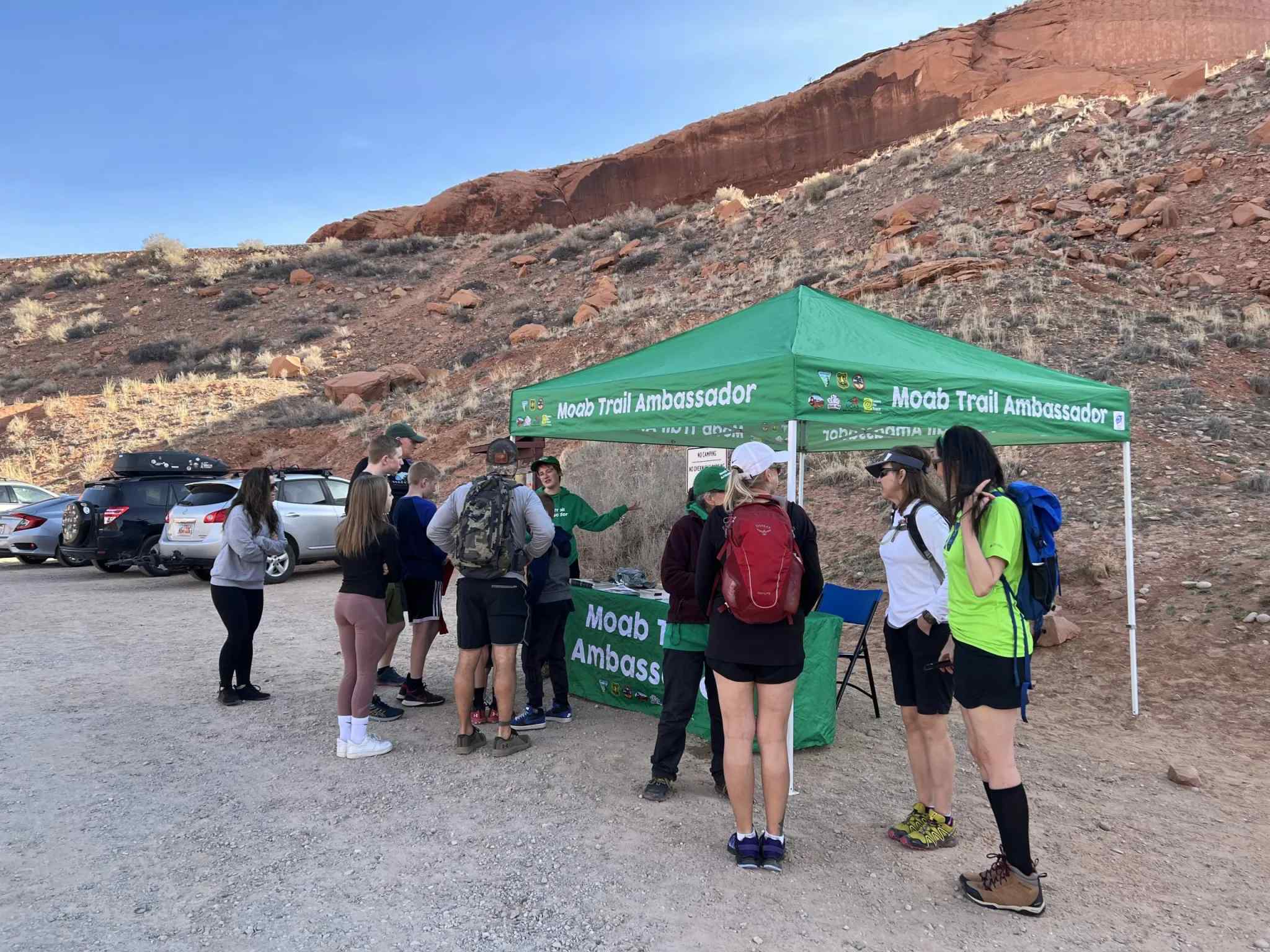
The program, which began in 2021, has earned state and national recognition for its educational outreach aimed at protecting public lands from tourism damage.
Much of the discord came from a basic disagreement about the county’s financial future.
Commissioner Brian Martinez was firm in his belief that the county will continue to face tourism revenue declines, emphasizing the need to prioritize essential services over what he termed “niceties.”
Commissioner Jacques Hadler, who helped launch the program, argued the county should retain control to maximize grant opportunities and align with state tourism goals.
“We have the opportunity to fund this with using very minimal amounts in the general fund, like probably less than $50,000,” Hadler said, noting the county’s $40 million overall budget.
Program may move to a nonprofit
While Commission Chair Bill Winfield said that he would like to see the program move from the county to an existing or newly formed nonprofit as soon as the end of the year, Commissioner Trish Hedin, who has started nonprofits herself, warned that was an unrealistic goal.
“It is not that easy to start a non-profit,” Hedin said, “and it’s really difficult as a startup non-profit to get grant funding.”
“There’s examples all over the state of Utah of these types of organizations falling under nonprofits,” Commissioner Bill Winfield said, citing local groups like the Canyon Natural History Association and Friends of Arches and Canyonlands.
The commission unanimously approved applying for a state Off-Highway Vehicle Recreation grant at a previous meeting, but staff sought clarification on whether commissioners still supported the application given the uncertainty around the program’s future.
Active Transportation and Trails Department Director Maddie Logowitz noted that a separate Outdoor Recreation Initiative grant application is due at the end of the month, creating a timing crunch for decision-making.
Working Group Formed
Commissioners agreed to form a working group to explore transition options, including representatives from the health department, land management agencies, and program staff. The group will examine practical steps for potentially moving the program to nonprofit status while preserving its effectiveness.
The commission reached tentative agreement to keep the motorized trail component of the program within county government, potentially under the sheriff’s or roads department.
Hadler emphasized that the program aligns closely with Utah’s 2023 outdoor recreation strategic plan, with objectives including decreasing search and rescue needs and fostering stewardship.
Hadler warned that eliminating the program just as the county plans to increase tourism marketing to $2.8 million annually would be counterproductive.
“We’re about to ramp up our advertising significantly,” Hadler said. “If that’s the case, then we’re about to see a lot more income coming in. And we’re also going to see a lot more impact.”
Appreciate the coverage? Help keep local news alive.
Chip in to support the Moab Sun News.