While fire grows, containment improves to 11% aided by cooler weather; some Utah evacuated residents return home
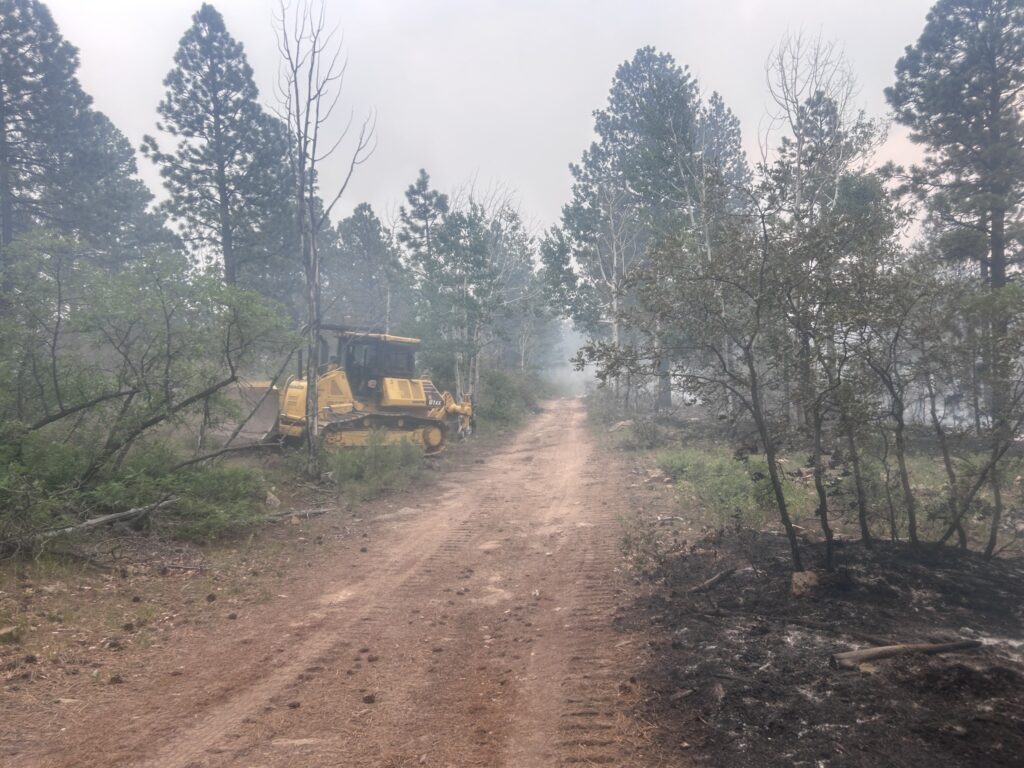
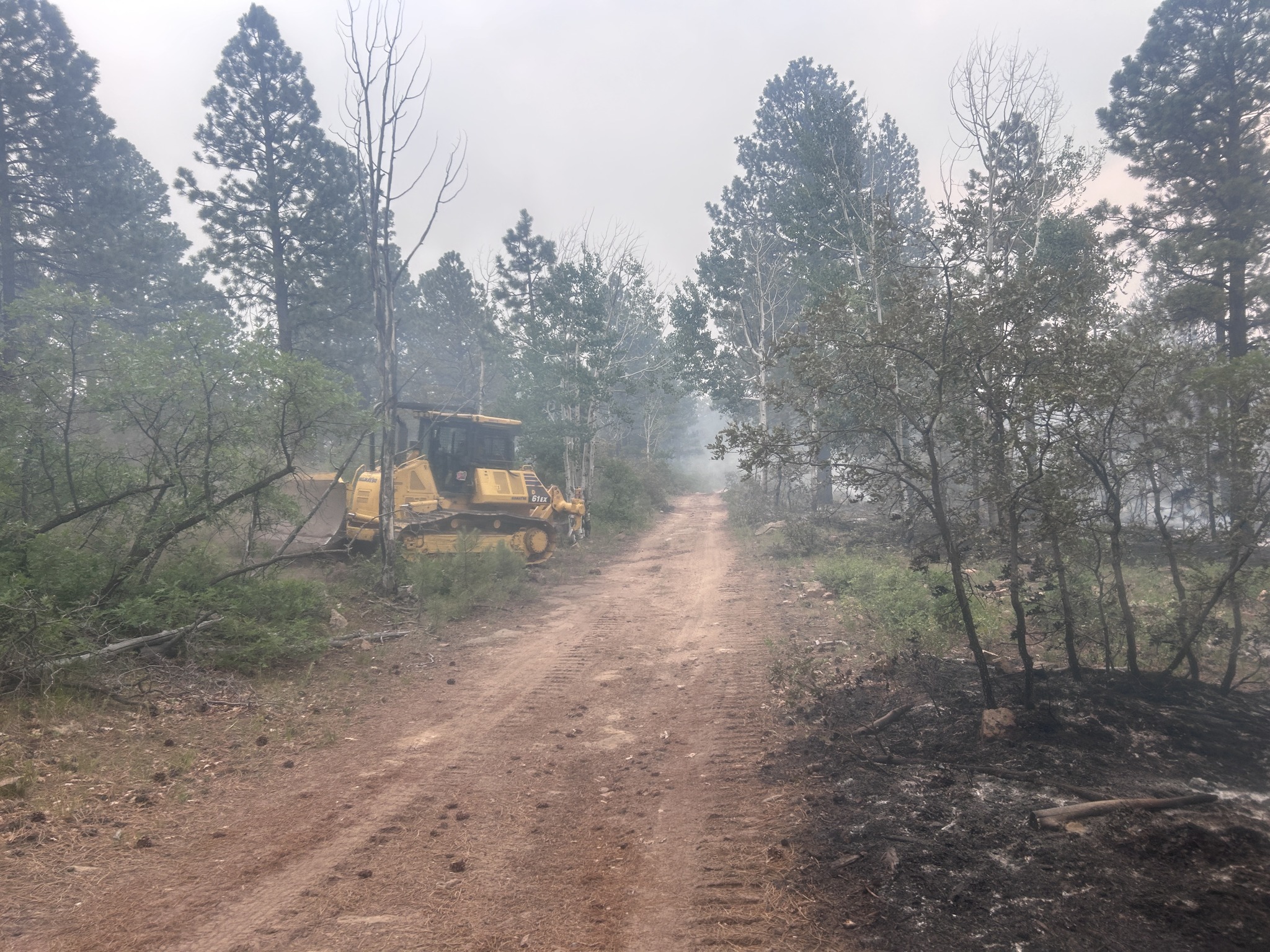
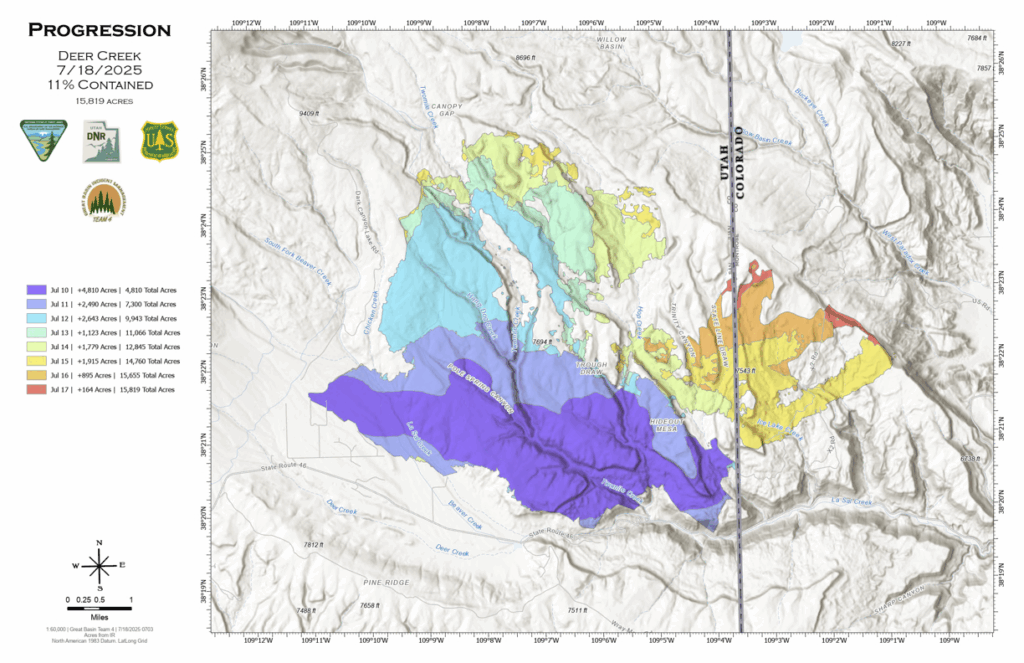
The Deer Creek Fire has grown to 15,819 acres but firefighters made significant progress yesterday, increasing containment to 11% as cooler temperatures and cloud cover aided efforts.
“Cloud cover and cooler temperatures aided firefighters yesterday allowing good progress along the north and east sides of the Deer Creek Fire,” according to Friday’s update from Great Basin Complex Incident Management Team #4.
The wildfire, which started July 10 near La Sal, now has 484 personnel deployed including 6 helicopters, 29 engines, 11 crews, and 5 dozers.
Join 1,000+ locals staying informed during wildfire season.
Evacuation and reentry progress
The fire has crossed into Colorado, burning approximately two miles north of State Highway 90 in Montrose County. Today, the Montrose County Sheriff’s Office issued pre-evacuation notices to residents near the fire; there are no current evacuations currently in place in the Paradox Valley.
While fire officials allowed residents in some areas of San Juan County to return to their homes yesterday and today, evacuation orders remain in place for San Juan County residents north of Highway 46, between Upper 2 Mile Road and the Utah-Colorado border.
Road closures and public safety
Highway 46/90 corridor near the Utah-Colorado border continues experiencing heavy fire traffic with possible low visibility conditions. The Manti-La Sal National Forest maintains an area closure for public safety.
County roads within the San Juan County evacuation area remain closed to public traffic. The Bureau of Land Management issued a Temporary Emergency Closure affecting roads on BLM-administered public lands in the Paradox area in Montrose County, Colorado.
The public should avoid the old airport landing strip in Spanish Valley to allow helicopters and crews to operate safely.
Fire history and investigation
The fire’s cause remains under investigation. Officials previously confirmed the fire is human-caused, with law enforcement and investigators continuing to process the scene and gather witness information.
Since July 10, the fire has grown from initial reports of several hundred acres to its current size spanning multiple jurisdictions. The blaze gained international attention last weekend when it produced a rare fire vortex or “firenado” that damaged equipment but caused no injuries.
Southwest Faces Extended, Intense 2025 Fire Season
The 2025 fire season has delivered challenging conditions across the Southwest, with Utah alone recording 563 wildfires burning over 77,500 acres through mid-July. The season reflects broader regional trends, as parts of Utah, Colorado, Arizona, and New Mexico now experience approximately one month more fire weather days than they did 50 years ago, according to data analysis by Climate Central.
The way that works is that climate patterns create spring and early summer temperatures averaging 1.5°C above normal which, combined with persistent drought and dry vegetation, have created tinderbox landscapes primed for ignition.
Currently, 88 large wildfires are burning nationally, requiring over 17,000 firefighters and support personnel.
Emergency alerts and information
Sign up for emergency alerts through:
- San Juan County, Utah: sanjuancountyut.gov/emergency-management/page/san-juan-alerts
- Montrose County, Colorado: montrosecountysheriffsoffice.com/montrose-alerts
- Grand County, Utah:
For current fire information, contact the Deer Creek Fire Information line at 385-393-0516 or email 2025.DeerCreek@firenet.gov.
Updated information is available at inciweb.wildfire.gov/incident-information/utmlf-deer-creek and facebook.com/UtahWildfire.
Fire conditions change rapidly. Residents should monitor official sources for the most current information.
Appreciate the coverage? Help keep local news alive.
Chip in to support the Moab Sun News.